

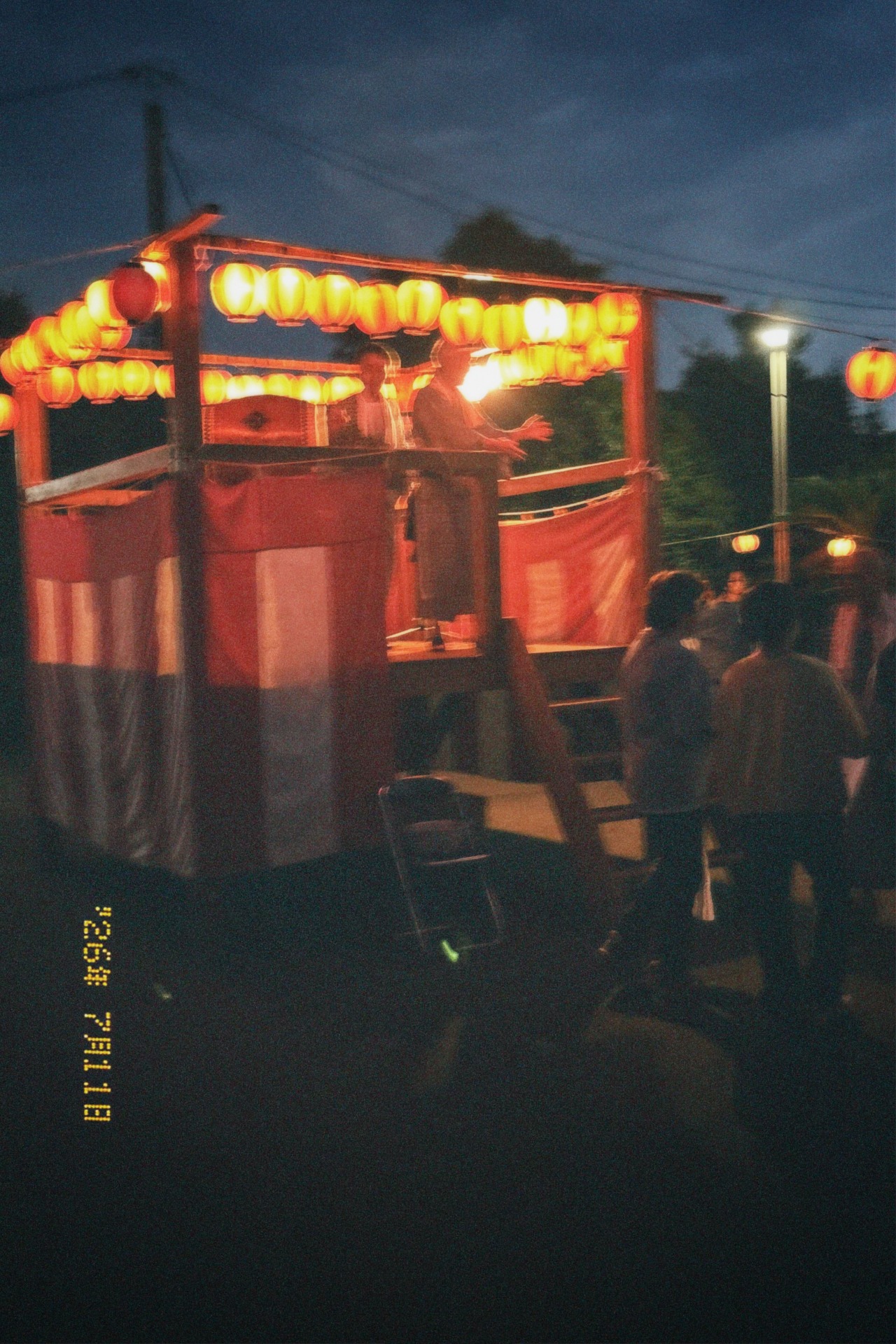
 大串集会場の少し先の道を歩いていると、夏の夕暮れにどこか懐かしい太鼓の音が響いてきます。私自身、4年前に大崎上島に来てから、夏の訪れを告げるこの音を耳にするたび、大串地区の夜に揺れる温かな火を思い出し、胸がわくわくした思い出があります。今回は、地域の人々の手によって一から準備され、大切に愛され続けている大串の伝統行事「虫送り」の魅力をご紹介します。
大串地区で毎年夏に行われる「虫送り」は、大崎上島で古くから守り続けられてきた大切な伝統行事です。もともとは、農薬などがなかった時代に、作物を荒らす害虫を松明の火と太鼓、鐘の音で集めて海へと追い払い、その年の「豊作」と「無病息災」を神仏に祈るために行われてきたそうです。
現在も大串集会場を拠点に、地域住民が一つになって毎年夏に開催されています。一から準備する櫓や太鼓の演奏などから祭りは始まり、時代が変わっても、こうした伝統の手仕事を自分たちの手で丁寧に行い、受け継いでいく姿には、大串の自然や歴史、そして人々の強い結びつきが感じらる行事でした。
この行事で最も印象的なのは、地域の子どもたちや大人たちだけでなく、近隣の広島叡智学園の生徒や留学生たちも一緒になって盆踊りを踊って参加している姿です。普段、お互いに言葉を交わす時間は多くなくても、太鼓の響きを肌で感じながら一緒に盆踊りを踊るという、ちょっとしたやり取りや時間を共有するだけでも、そこには本当に温かい「小さなつながり」が生まれています。
お祭りの準備を進める地域の方々にお話を伺うと、「派手に大きくするよりも、この大串の今の規模や、住民みんなの顔が直接見えるこの環境が好きなんだ」とおっしゃっていました。住民同士が直接顔を合わせ、声を掛け合いながら伝統行事を作り上げ、次の世代へと繋いでいく。そこにこそ、このお祭りを続ける最高のやりがいがあるのだそうです。
大崎上島という美しい自然と、人と人が直接ふれあえる規模感だからこそ生まれる「自然なつながり」。その温かさが、虫送りという行事を存続させる大きな原動力となり、大串の夏を彩っているのだと感じました。
最後に、取材や準備の様子を優しく教えてくださった大串地区のみなさま、本当にありがとうございました。
Walking down the road just past the Okushi Assembly Hall, a nostalgic, familiar sound of drums echoes through the summer evening. Ever since I arrived on Osakikamijima four years ago, hearing this sound has always signaled the official start of summer for me, filling me with excitement as I picture the warm, flickering flames dancing in the night. Today, I want to share the unique charm of “Mushi-okuri” (pest-chasing festival)—a traditional event lovingly prepared and kept alive from scratch by the hands of the local community.
The annual “Mushi-okuri” summer festival is a cherished cultural tradition that has been carefully passed down through generations in the Okushi district. In times before modern agricultural pesticides existed, crop-destroying pests were a matter of life and death. To protect their harvest, villagers gathered to draw the harmful insects away toward the sea using the fire of bamboo torches (taimatsu) alongside the loud, ringing sounds of drums and gongs, praying to the heavens for a bountiful harvest and the health of their community.
Today, using the Okushi Assembly Hall as their gathering hub, local residents still unite every summer to keep this tradition alive. The festival begins with the locals cutting down bamboo from the hills to hand-craft every single torch from scratch. Even as times change, seeing the community gather to perform this delicate traditional craftsmanship with their own hands truly shows the profound connection between Okushi’s natural landscape, its history, and its people.
As the sun sets and twilight envelopes the area around the assembly hall, one by one, the handmade torches are set ablaze. Watching the glowing crimson procession slowly wind its way along the dark country roads, with the deep, vibrating resonance of traditional drums echoing through your entire body, is an unforgettable experience that brings the collective energy of the night to its peak.
What stands out most during this event is seeing local children and elderly residents marching side-by-side with students and international boarders from nearby Hiroshima Global Academy (HiGA). Though they may not share long conversations on a daily basis, walking together in the quiet night, bathed in the warm light of the torches and moving to the pulse of the drums, creates a natural space where simple interactions flourish and genuine, heartwarming bonds are born.
When speaking with the organizers during the festival preparations, they shared a sentiment that stuck with me: rather than trying to expand or commercialize the event into a massive tourist attraction, they prefer keeping it exactly as it is—at a scale where they can see and greet every single neighbor. Being able to look one another in the eye, cooperate closely, and personally pass these values down to the youth is what makes the continuous effort so deeply rewarding.
It is precisely because Osakikamijima offers these community events amid its beautiful nature that such natural human connections can thrive. This shared warmth is the true driving force that keeps “Mushi-okuri” alive, shining brightly as a beautiful crimson flame in the summer night sky of Okushi.
Lastly, a warm thank you to all the residents of the Okushi district for taking the time to share their stories and welcome us so kindly during our visit.
